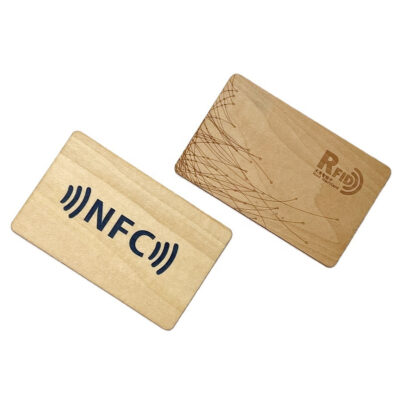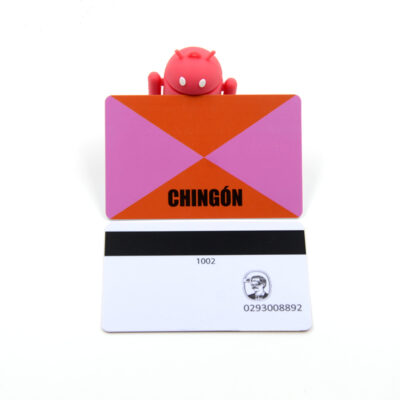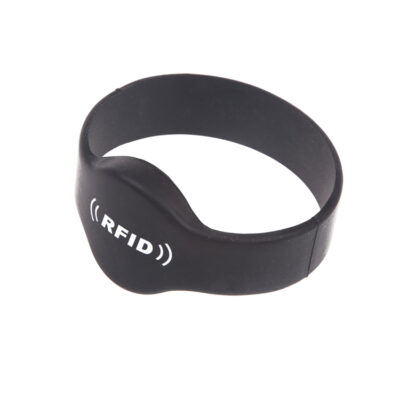
Radio Frequency Identification (RFID) technology is widely used to track and identify objects using electromagnetic fields. There are many types of RFID tags, each designed for specific applications and environments.
Below is an overview of the main types of RFID tags:
Passive RFID Tags
Description: These tags do not have batteries and are powered by energy from the RFID reader signal.
Range: The reading range is usually short, generally not exceeding 10 meters.
Cost: Usually more economical than active labeling.
Application Cases: Commonly used in inventory management, access control, and supply chain tracking.
Active RFID Tags
Description: These tags are equipped with their own batteries, enabling them to transmit signals independently.
Range: Enables a longer reading range, typically exceeding 100 meters.
Cost: Higher price due to batteries and other components.
Application Cases: Commonly used for tracking high-value assets, real-time location systems, and environments requiring greater distance.
Semi-passive (or battery-assisted) RFID tags
Description: These tags have a built-in battery that powers the tag circuitry, but still require an external card reader for communication.
Scope: The scope is farther than that of passive tags, but shorter than that of active tags.
Cost: Prices typically fall between those of passive and active labeling.
Application Cases: Used for applications such as temperature monitoring and environmental sensing.
Low Frequency (LF) RFID Tags
Frequency range: Operating frequency from 125 kHz to 134 kHz.
Range: Short-range reading range, typically up to 10 cm.
Application Cases: Commonly used in animal tracking, access control, and automotive applications.
High Frequency (HF) RFID Tags
Frequency range: Operating frequency is 13.56 MHz.
Measurement range: The reading range is approximately 10 centimeters to 1 meter.
Application Cases: Widely used in contactless payment systems, library book tracking, and smart cards.
Ultra-High Frequency (UHF) RFID Tags
Frequency range: Operating frequency is between 300 MHz and 3 GHz, typically around 860–960 MHz.
Range: Reads distances from several meters to 12 meters or more.
Application Cases: Ideal for supply chain management, inventory tracking, and large-scale asset management.
Dedicated RFID tags
Description: These labels are designed for specific applications, such as high-temperature environments, harsh conditions, or embedded in products.
Application Cases: For example, it can be used in pharmaceutical labeling, food safety, and industrial applications.
HYDcard focuses on providing innovative RFID solutions to meet your specific needs. Explore our RFID solutions today and see how we can help you optimize your business operations!